

Sandbox:Skull Islanders (RKO)
| Skull Islander incarnations | |||||||
|
|
| |||||
| |||||||||||||||||||||||||||||||||||||||||||||||||||||||||||
|
This page is a sandbox. Sandboxed pages are unfinished and not yet approved. Information found here may be unpolished or unverified. |
|---|
The indigenous people of Skull Island are a tribe of humans living on Skull Island who first appear in the 1933 film King Kong, its 1932 novelization, and its derivative works.
Appearance
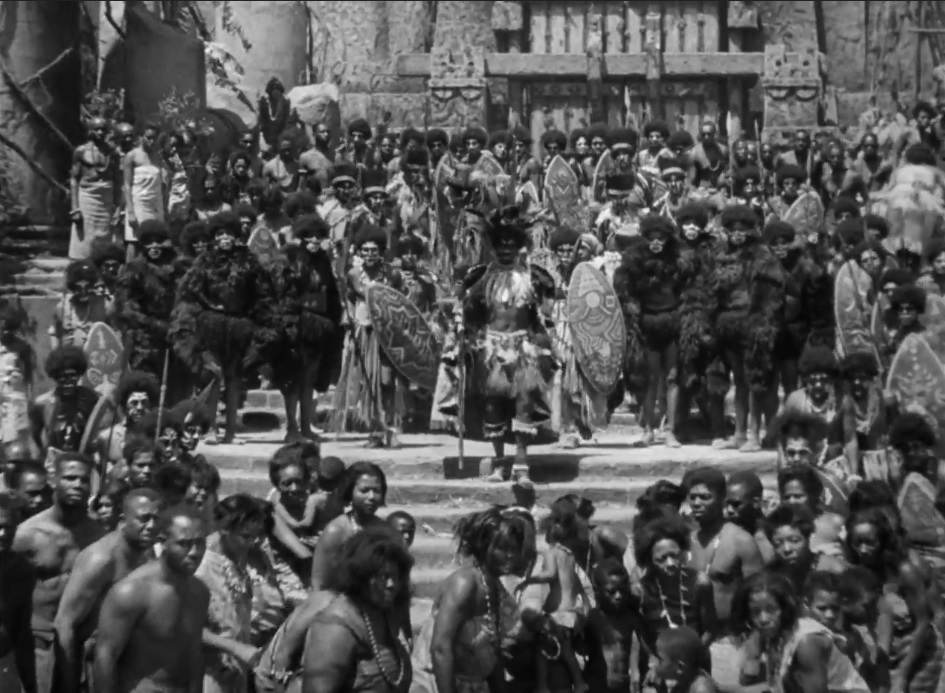
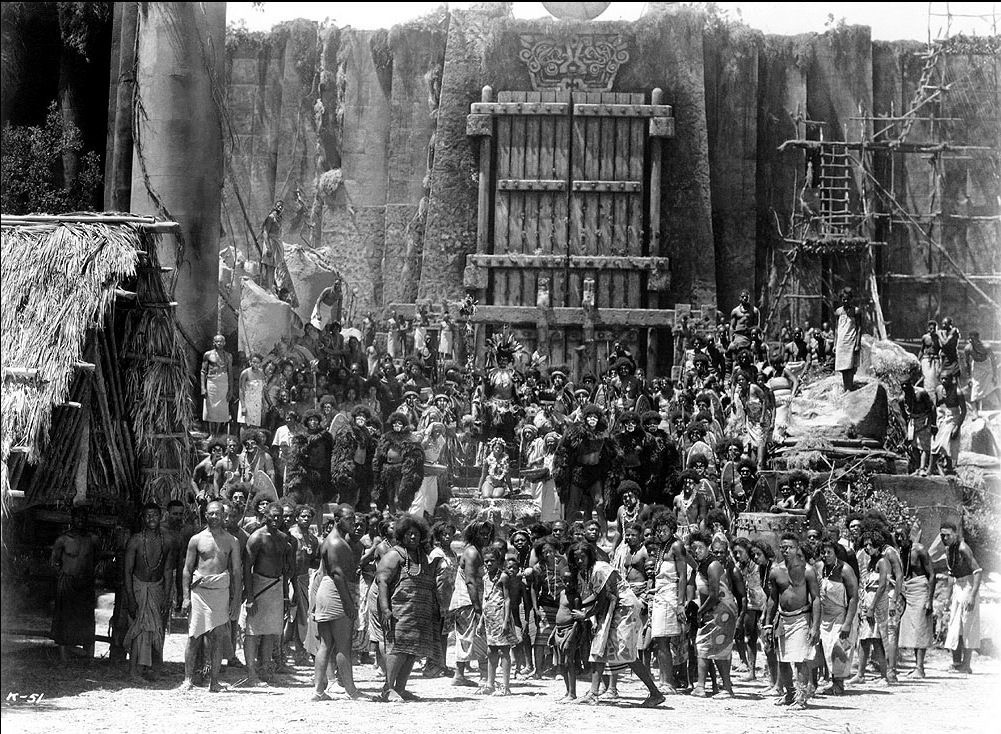
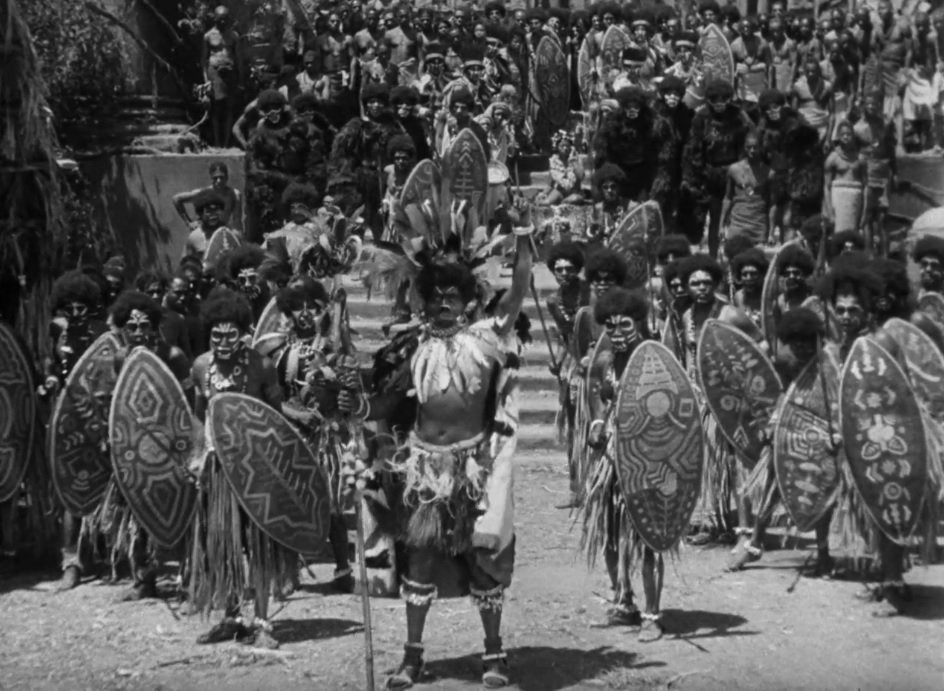
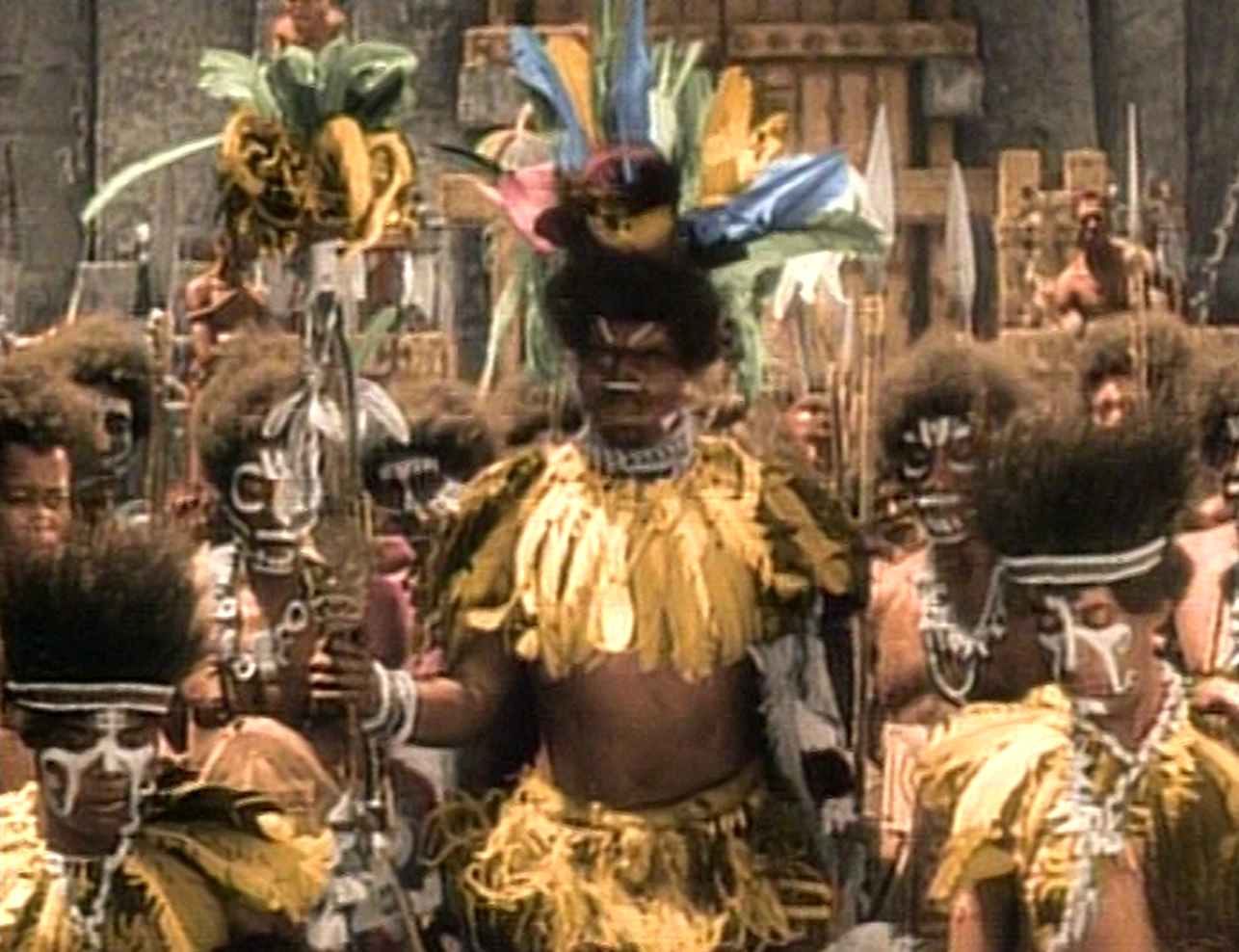
In the films, the Skull Islanders have dark skin and hair, but later material sometimes gives them lighter skin and tattooing more reminiscent of Polynesian cultures. They are typically adorned in feathers and grasses.
Culture
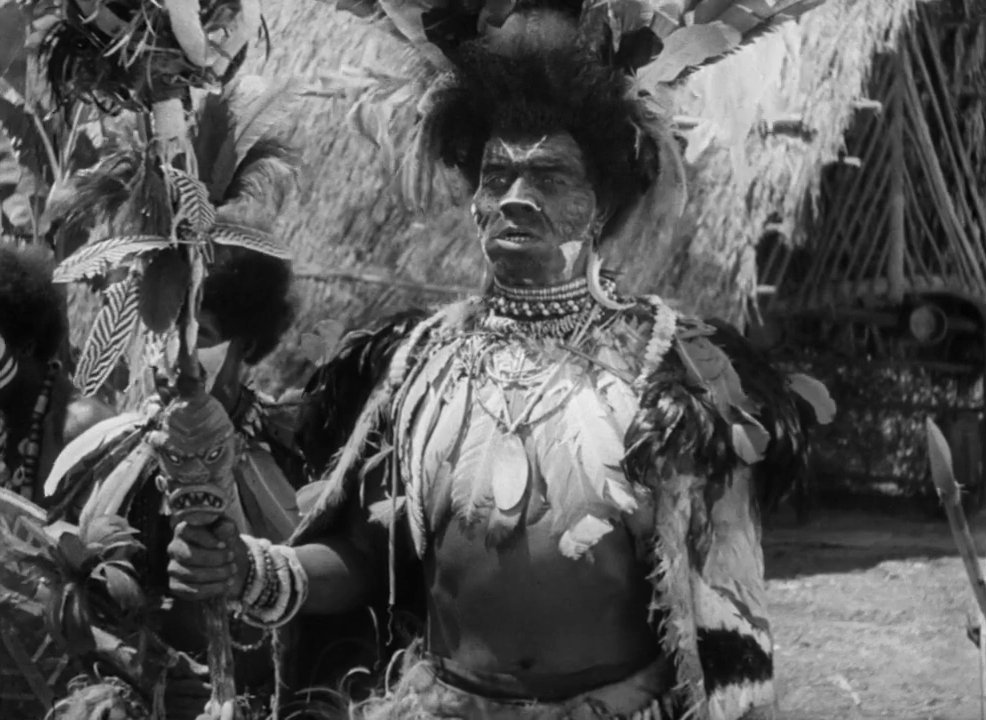
The culture of the people of Skull Island is not explored directly in the source material, but their language and worship of Kong is suggested by Captain Englehorn to link them to the peoples and cultures of the Malay archipelago. (QUOTE SOURCE) They demonstrate that they have many elaborate facets of civilization. Their clothes can be seen made of cloth, grasses, feathers, skins and fur, suggesting access to weaving and tanning technologies. The decoration seen on their faces and shields made of wood or leather implies an artistic tradition. An examination of their spears reveals them to be roughly uniform with long, straight shafts, and attached, sharpened heads, revealing an understanding of weaponsmithing.
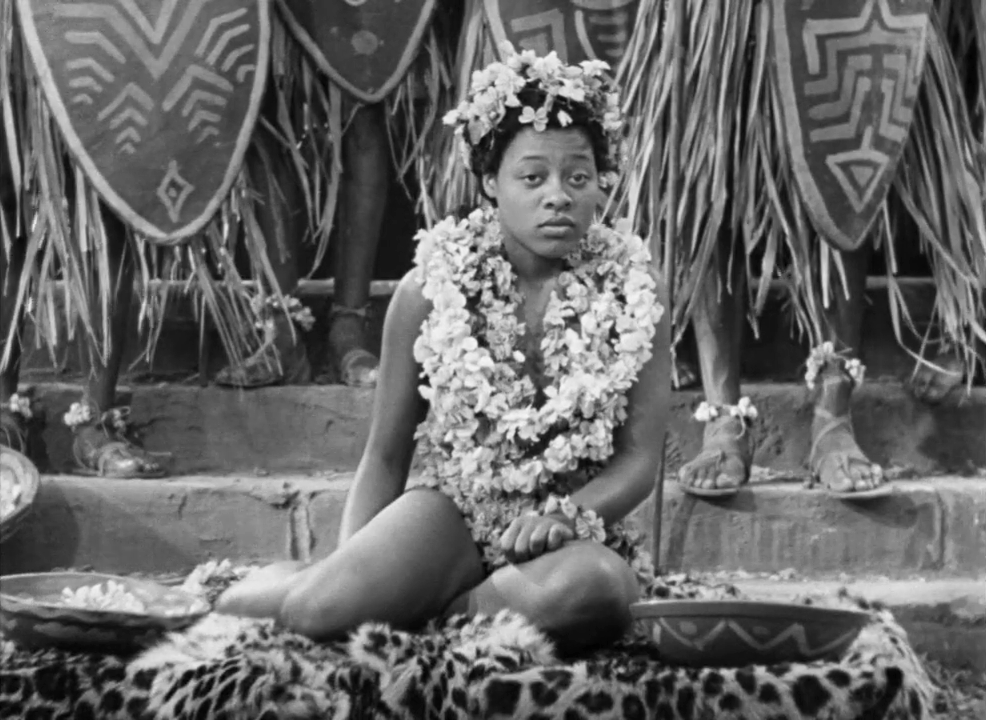
A central part of their culture is the worship of Kong, to whom they sacrifice a woman at intervals. Supplementary materials suggest that this may occur annually(RIPPERGER? SOURCE), and that Kong, like many gods/monsters is worshipped as much for protection from the monsters beyond the wall, good rainfall and bountiful harvests(KK91 SOURCE), as he was to keep him from destroying them. They are led by a chieftain, and have a "witch doctor" in charge of ceremony and spirituality. Part of their ritual to Kong typically includes people dressed as apes to some degree, but whether these are costumes or the skins of actual animals is not widely agreed upon (APE SKINS QUOTE, CONTRA EVIDENCE)
The people seen by Denham's film crew are not widely interpreted as being the builders of Skull Island's great wall, but they do maintain it to ensure their safety. While the origins of the wall are usually left ambiguous, the 1933 newspaper serial by Kingsley Long posits the possibility that the island was once a great continent, now sunken, and that it had once been colonized by Atlantis, who built the wall as well as an ancient city lost to time in the jungle.
History
- King Kong (1933)
- Son of Kong (1933)
King Kong (1933)
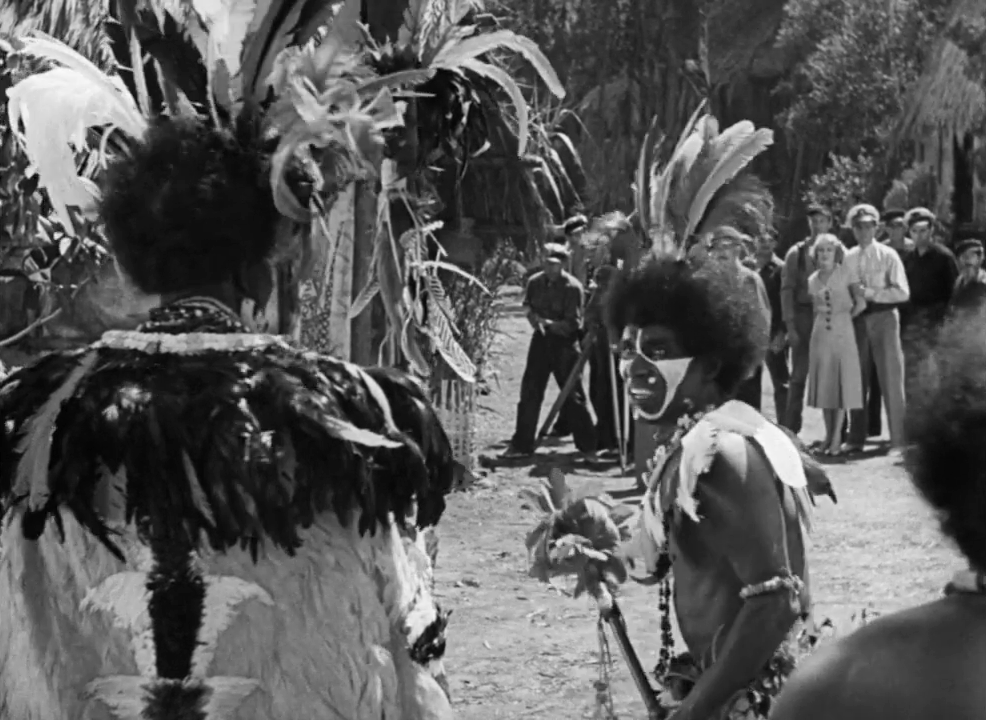
In the village, in front of a giant gate in a high wall, the islanders were performing a ceremony to prepare for a sacrifice. They were decorating a young girl with flowers to the sound of drums, when Chief noticed that Carl Denham and the Venture crew were watching them. Chief, accompanied by his bodyguards, approached and spoke to them in a language that the Captain Englehorn understood. When Chief saw the blonde Ann Darrow, he wanted to sacrifice her to the monstrous Kong and offered six women of his tribe in exchange for Darrow. Englehorn refused, and the crew returned to the Venture. The following night, the natives rowed a canoe to the ship, found Darrow, and tied her to two posts on a giant altar on the other side of the wall. When they had finished their preparations, they beat a gong and called upon Kong. The giant ape came and carried Darrow away into the jungle, and a team led by Jack Driscoll followed them. The alarmed chief watched from the wall as they fled into the jungle. As Englehorn later recounted, they had to fire several shots into the air to scare the islanders into hiding in their huts.
When Driscoll and Darrow returned a day later, Kong came for them and tried to break down the gate in the wall. Forgetting their conflict with Englehorn's men, the Skull Islanders joined them in trying to hold the gate. Their attempts were unsuccessful, and Kong, having broken the massive bolt, invaded the village, plunging it into panicked chaos. Having destroyed many huts on his way, Kong brutally killed several natives, crushing some and tearing others apart with his teeth. Wooden spears proved too weak a weapon against such a monster. Having passed through the village, Kong came to the coast, where Carl finally put him to sleep with chloroform. Inspired by such a victory, he was eager to take this beast to New York City to show it to the public.
Son of Kong
With Kong gone, the island fell into dissaray, which the Chief of the islanders blamed on his absence. A series of earthquakes would shake the island time and time again, and when their peninsula was approached by a canoe holding Carl Denham, the islanders shooed him away with spears, seeing him as the forefather of their misfortune. Within days of this unlikey meeting, a last great earthquake plunged the island into the sea, taking with it its secrets and prehistoric life. The fate of the villagers is left unknown, but their practice of canoe building leaves hope for their survival.
Technology
Weaponsmithing
Skull Islanders use mainly wooden spears. These spears are used by the chieftain's bodyguards and those warriors who defend the village when Kong comes. The giant ape feels the blows of the spears, but they are unable to hurt him severely. For their own protection from spears, the natives use wooden shields.
Weaving
Some depictions of the islanders depict them with different levels of cloth weaving prowess, from simple roughspun garments, to colorful, tassled tapestries.(CITE ROCKETEER)
Tanning
TBA
Language
The language used on Skull Island is entirely ficticious, and made up of random sounds by the writers and actors portraying them. However, it is oftentimes recognized by the characters, who are then able to provide a rough translation.
In the original film, Captain Englehorn recognizes some of the islanders' speech from the Nias language, spoken by the people of Nias Island, off the coast of Sumatra in Indonesia.
Known words
| Word | Translation |
|---|---|
| bala | friend |
| tasko | "beat it" |
In the 2026 comic book series The Rocketeer: The Island from IDW Publishing, an archaeologist recognizes their language as being "a variation of Pukupakhan," most likely a misspelling of Pukapukan, a language spoken in the Cook Islands.
In the 2020 French language children's book King Kong by Fred Bernard, the SHIP's Māori crewmate recognizes the Skull Islanders' language and can translate for his shipmates.
Masonry
While the modern inhabitants of Skull Island are not usually credited with the creation of the island's iconic wall, they do take efforts to maintain it and keep it strong. The natives built a wall from giant cubic stone blocks. When placed vertically, the largest blocks are taller than a human.(SOURCE PLS)
Agriculture & Husbandry
The natives breed chickens, which they apparently brought with them when they colonized the island.
Water Vessels
The islanders have canoes which they use to travel along the coastal waters.
Firemaking
Like most human cultures, the Skull Islanders can make fire.
Books & short stories
- King Kong (1932)
- "King Kong" (1933) - Boys' Magazine
- "King Kong" (1933) - The Mystery Magazine
- "King Kong" (1933) - London Daily Herald
- "After King Kong Fell" (1973)
- The Illustrated King Kong (1976)
- King Kong (1983) - Step Up Adventures
- Anthony Browne's King Kong (1994)
- Kong Reborn (2005)
- King Kong (2014) [Adaptation by Christophe Blain]
- King Kong (2020) [Adaptation by Fred Bernard]
"After King Kong Fell"
In a world that supposes the 1933 film and 1932 novelization are fictionalized accounts of real events, the main story of King Kong plays out more or less as described. But a short time after Kong's eponymous fall, the island's "witch doctor" assassinates Carl Denham as revenge for his people.
King Kong (1983)
In Judith Conway's adaptation of the novel, the islanders are not the builders of the wall, but take care to maintain it. Legends claim that they do this to keep them safe from the fearsome Kong. This adaptation is another that supports the notion that the islanders are culturally connected if not descended from the Malay people of Sumatra's Malay peninsula. Like other adaptations, they ritually sacrifice a young woman clad in flowers to be the "bride of Kong." This ceremony includes colorful body paints, fire, drummers, and six men dressed like gorillas, who carry the offering through the wall's gate to offer her to Kong. After this, they climb the wall using ropes to see Kong take her away. While Conway's text refers to them standing atop the wall, Michael Berenstain's art in the 1983 edition depicts the wall as being made of vertical logs with sharpened tips, meaning there was no real "top" to stand on. The wall is similarly constructed in Paul Van Munching's 1988 illustrations imply a platform on the village side to allow this. One day, the villagers were conducting their sacrifice like usual until their chief spotted several intruders. He told them to leave, but their translator asked them questions about the ceremony. The chief gave a brief explanation, but then spotted among the interlopers a strange creature: The blonde haired Ann Darrow. He offered to trade six of their women for the "woman of gold," but the strange men simply retreated. That night, a crew of islanders approached the outsiders' ship and waited for the opportunity to take Ann back to the village, where the ceremony had been set up again for this strange new bride. They took her in their canoe back to shore with their hands over her mouth to keep her from screaming. The ceremony went agead as planned, but the villagers were curious if Kong would be willing to accept the woman of gold, so they stood in silence as he approached the altar. When they saw him take her they began to chant again. Their celebration did not last. A host of armed men from the ship stormed the village, opened the gate and chased Kong into the jungle. Many cowered in their homes, unsure of what kind of devils these men must be if they intended to hunt the great Kong.
Within a day the woman of gold had been returned to the village. The islanders were awestruck, but soon began their chanting and drumming again as Kong approached their home. They worked with the sailors to try and get the gate closed in time, but were unable. Many of them lost their lives under Kong's giant feet as he trampled the gate searching for his offering.
Audio Plays
Comics
- King Kong (1933)
- Son of Kong (1933)
- King Kong (1968)
- King Kong (1991) [issues 1-6]
Gallery
King Kong
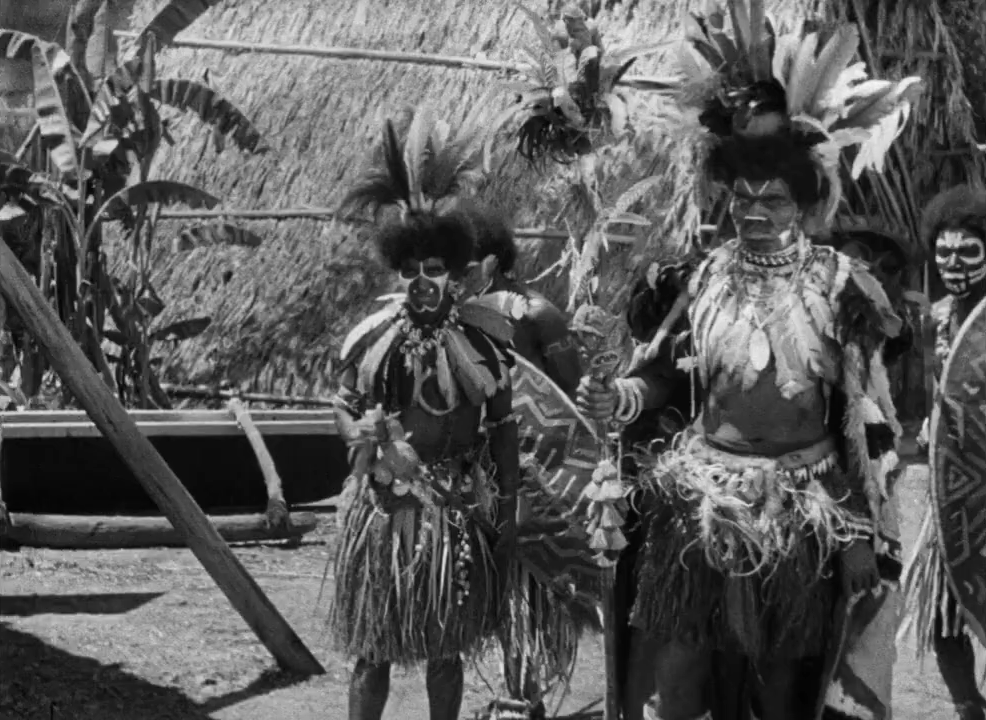
Son of Kong
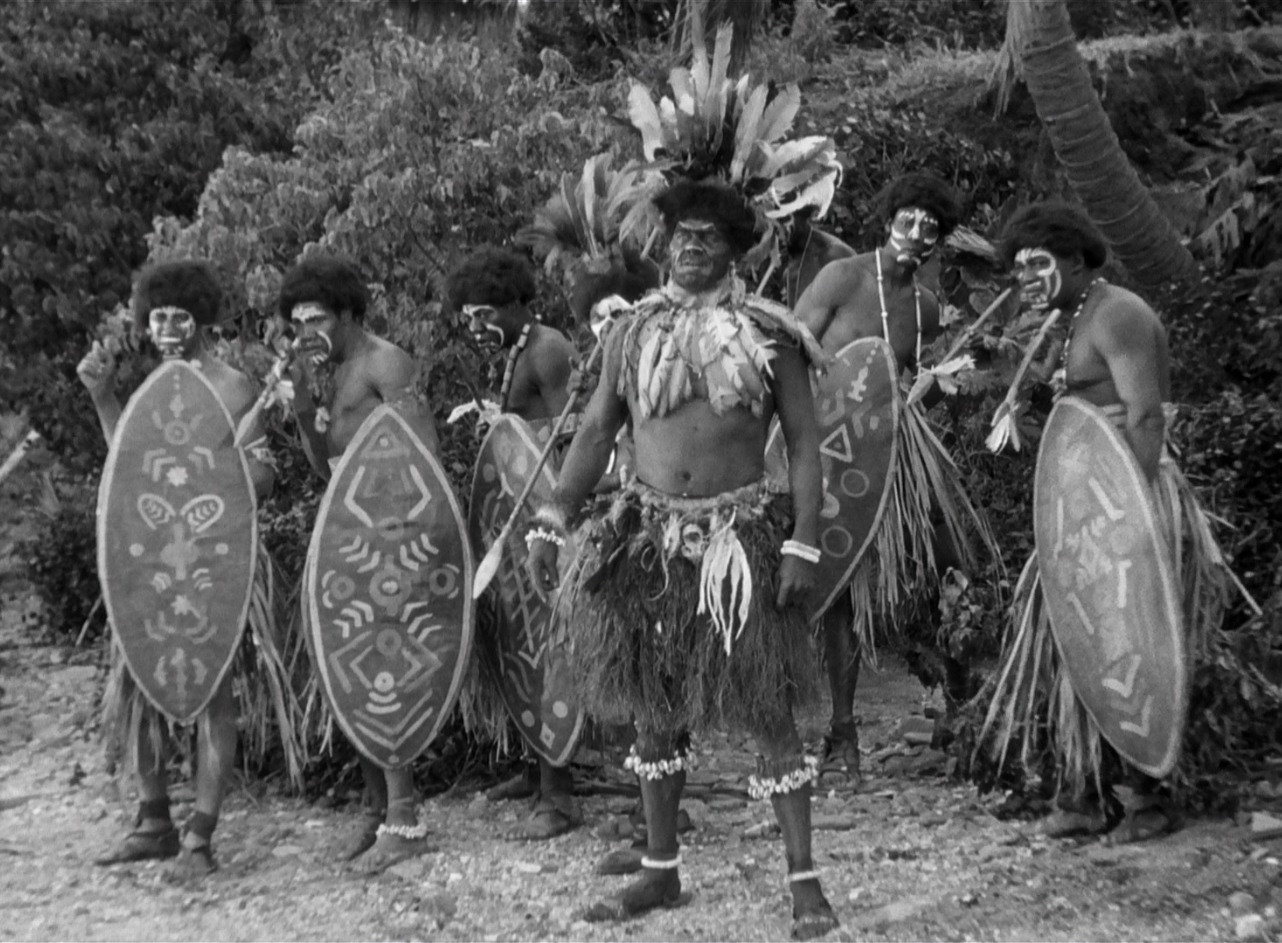
Trivia
- The Skull Islander costumes are reproduced very accurately in the 2005 King Kong remake. However, they are not worn by actual natives, but by performers at Kong's first New York City exhibition.
- Unlike the islanders in other films, these natives have white chickens as pets.
References
This is a list of references for Skull Islanders (RKO). These citations are used to identify the reliable sources on which this article is based. These references appear inside articles in the form of superscript numbers, which look like this: [1]
Comments
Showing 0 comments. When commenting, please remain respectful of other users, stay on topic, and avoid role-playing and excessive punctuation. Comments which violate these guidelines may be removed by administrators.