

Ankylosaurus
| |||||||||||||||||||||||||||||||||||||||||||||||||||||||||||||||||||||||

Ankylosaurus (アンキロサウルス Ankirosaurusu) is an extinct monotypic genus of large ankylosaurid dinosaurs from the Late Cretaceous Period. One of the most famous dinosaurs, it has appeared in numerous forms of media, including some in the kaiju genre, and served as the basis for the Godzilla kaiju Anguirus. It was also planned to appear in the scrapped 1931 film Creation,[citation needed] a precursor to the 1933 King Kong film.
Name
Ankylosaurus' name comes from the combination of the Greek words αγκυλος (ankulos)―which typically means "bent" or "crooked",[1] but the connotation is instead "fused" or "stiff" to refer to bones fused together, as seen in the condition ankylosis[2]―and σαυρος (sauros, meaning "lizard).
Appearance
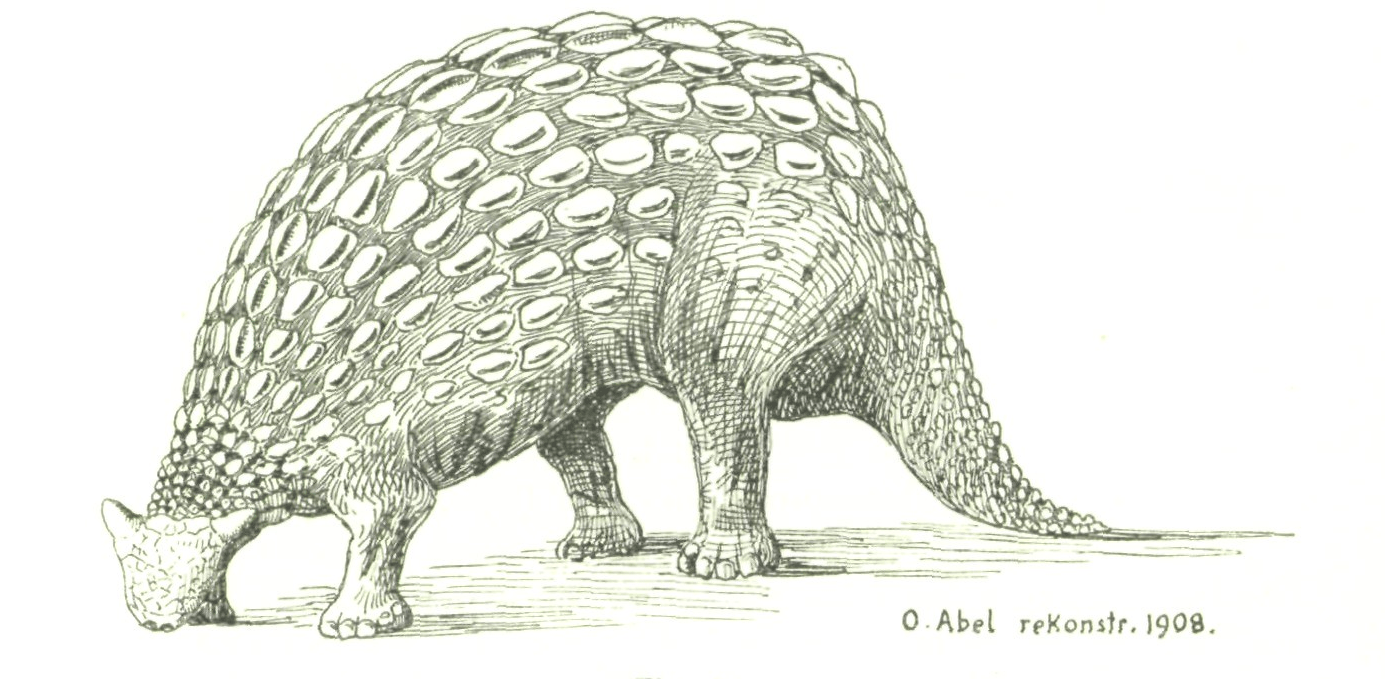
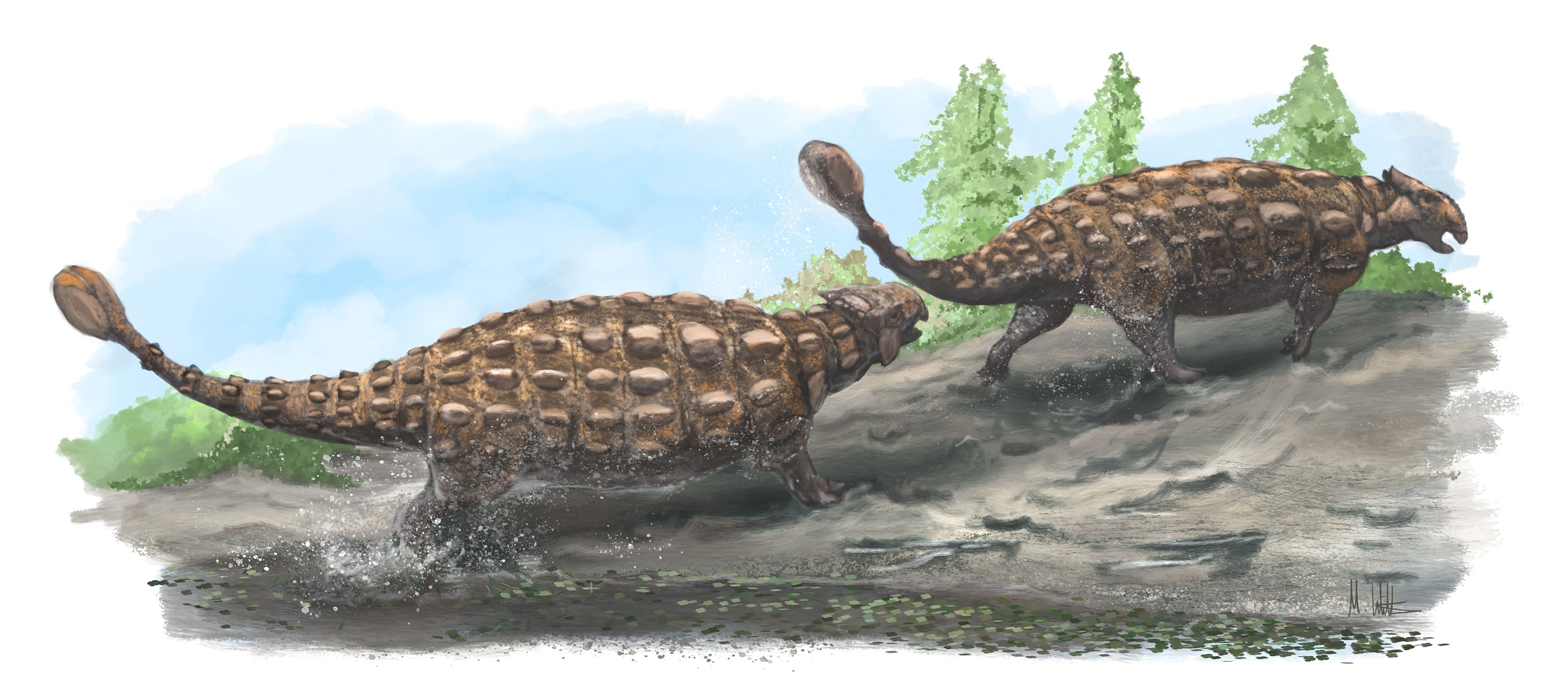
Ankylosaurus has generally been depicted as a large, armored, quadrupedal dinosaur with a stout body, short limbs, a short and broad skull with a beaked mouth, and large spikey osteoderms on the sides of the head. When paleontologist Barnum Brown first described Ankylosaurus in 1908, due to how fragmentary the remains were, he based his skeletal reconstruction on Stegosaurus. The resulting reconstruction gave the animal a highly arched back, rows of tightly packed and uniformly shaped osteoderms running from behind the head to the tail,[3] and a short, clubless tail―it would not be for another two years that the first and only well-persevered club from the genus would be found.[3][4] He compared his reconstruction of the animal to Glyptodon.[5] With increased understanding of the animal, the club and handle were added to the tail, the back is not particularly arched, and the shape and arrangement of the osteoderms have changed considerably.
The most recent reconstructions of Ankylosaurus depict the osteoderms more spaced out and placed in longitudinal rows. The size and shape of the osteoderms vary based on location: those along the neck and torso are keeled and generally ovular, though some near the base of the neck are more triangular and those on the flanks are more rectangular; the osteoderms on the back of the hips are circular and smaller than those of the torso, while those on the flanks of the hips are raised and pointed; the tail osteoderms are likely smaller and pointed, leading up to the large, rounded osteoderms that compose the club knobs; and the forelimbs bore keeled osteoderms on the anterolateral parts of the forelimb. The rows of back osteoderms are separated by creases of skin.[3]
History
- Godzilla Raids Again (1955) [mentioned]
- Godziburst (web 2026) [mentioned in episode 15]
- Monarch: Legacy of Monsters (TV 2026) [art in episode 17]
Showa era
Godzilla Raids Again
- Main article: Anguirus (First Generation).
Ankylosaurus lived 150–70 million years ago, during the Cretaceous Period. One such Ankylosaurus, Anguirus, survived in dormancy into modern times, when hydrogen bomb testing in the 1950s awakened it.[6]
Monsterverse
Monarch: Legacy of Monsters
"String Theory"
A framed art piece of an Ankylosaurus rested on a shelf in Kentaro Randa's room.
Abilities
Physical abilities
Ankylosaurus' primary means of combat were their iconic club tails, a defining trait of ankylosaurids. The tails of ankylosaurids were very laterally flexible, allowing them to swing the club about 100 degrees. The osteoderms comprising the knobs of the club were cancellous, which reduced the club's mass, thereby reducing rotational inertia and making it suitable as a weapon. It is currently thought that the club could have been used against predators, in intraspecific combat, or both,[7] with a 2021 description of fellow ankylosaurid Tarchia highlighting evidence in support of intraspecific combat as the primary evolutionary pressure for tail clubs in ankylosaurids.[8]
In Godzilla, King of the Monsters, the Ankylosaurus wielded its tail club against urban structures and Godzillasaurus. When first attacking Godzillasaurus, the Ankylosaurus also charged headfirst into Godzillasaurus' chest.
In Kong of Skull Island, the Ankylosaurus' tail clubs were capable of smashing trees and the stone structures of the Citadel. One killed a Triceratops with a strike to the head.
Durability
Like other ankylosaurs, the osteoderms that covered Ankylosaurus' body acted as armor protecting the animal from would-be predators. In ankylosaurids, it would also protect them from club strikes in intraspecific combat, as demonstrated by grooves on the club knobs and asymmetrical shape of the knobs, thought to be due to wear from striking osteoderms.[8]
Weaknesses
In Godzilla, King of the Monsters, the Ankylosaurus was wounded by a bite from Godzillasaurus despite its osteoderm armor.
The only unprotected spots of Ankylosaurus are the legs and underside, leaving it vulnerable to a predator which manages to flip it over.
Comics
- Godzilla, King of the Monsters chapter 5 (1992)
- Godzilla: Rage Across Time #5 (2016)
- Kong of Skull Island #11 (2017)
Godzilla, King of the Monsters

Dr. Mad Oniyama uncovered a fossil of a new species of giant Ankylosaurus, which he planned to use to create a monster to defeat Godzilla. Shortly after, Mad Oniyama was joined by his descendent from the 28th century, who offered his aid in exacting the mad scientist's goals. As part of their plan, the Ankylosaurus skeleton was placed on display in a dinosaur expo. During the expo, the two Oniyamas used KIDS to fire a Time Warp Beam at the fossil, reviving the Ankylosaurus, who proceeded to rampage through the surrounding area. When Godzilla arrived at the site of the expo to protect Hideo Kaneko and his friends, who attended it, the Oniyamas carried out the second part of their plan and used the Time Warp Beam to revert Godzilla to his pre-irradiated Godzillasaurus form. The two dinosaurs clashed briefly, but the Ankylosaurus was no match for Godzillasaurus. To regain the upper hand, the Oniyamas fired the Monster Evolution Accelerator from KIDS into the Ankylosaurus' body, mutating it into the much larger Anguirus.
Godzilla: Rage Across Time
"The Cretaceous"
An Ankylosaurus was among a group of prehistoric animals fleeing from a battle between Godzilla, Anguirus, Baragon, and Varan.
Kong of Skull Island
Issue #11
At the Citadel, Aguul and his followers released a scent trigger gas into the surrounding mines as part of a plan to turn the Kong on Skull Island mad, thereby causing them to attack the Tagu-Atu. However, the gas seeped out of the mines from cracks in the ground, turning the prehistoric reptiles on the island mad. Among the dinosaurs sent into a craze were Ankylosaurus, which caused damage to the surrounding forests. The Ankylosaurus rushed into the Citadel along with several other prehistoric reptiles, breaking through the exterior walls. In the Citadel, the armored herbivores continued to rampage, recklessly destroying surrounding structures, and one killed a Triceratops.
Gallery
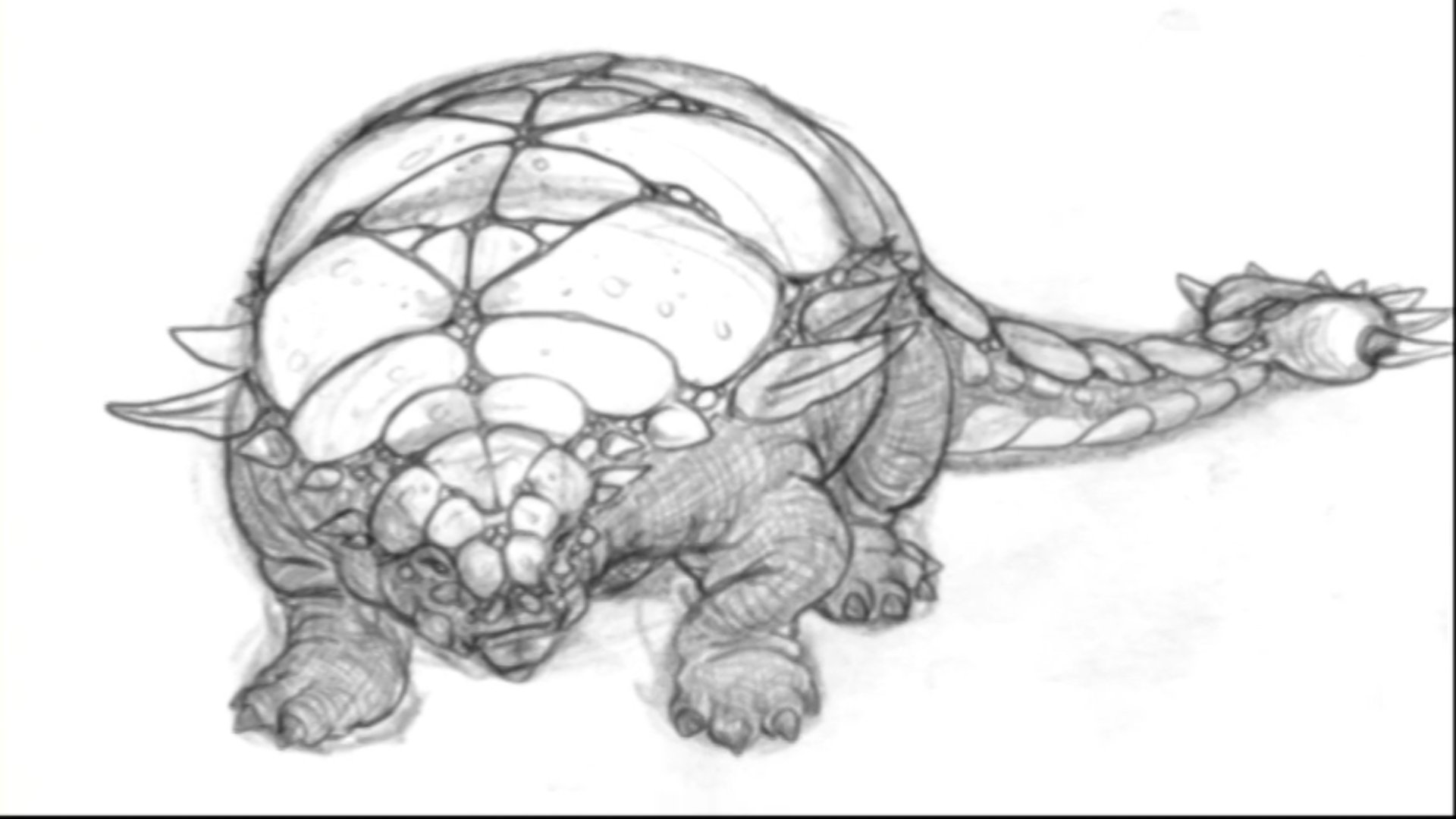
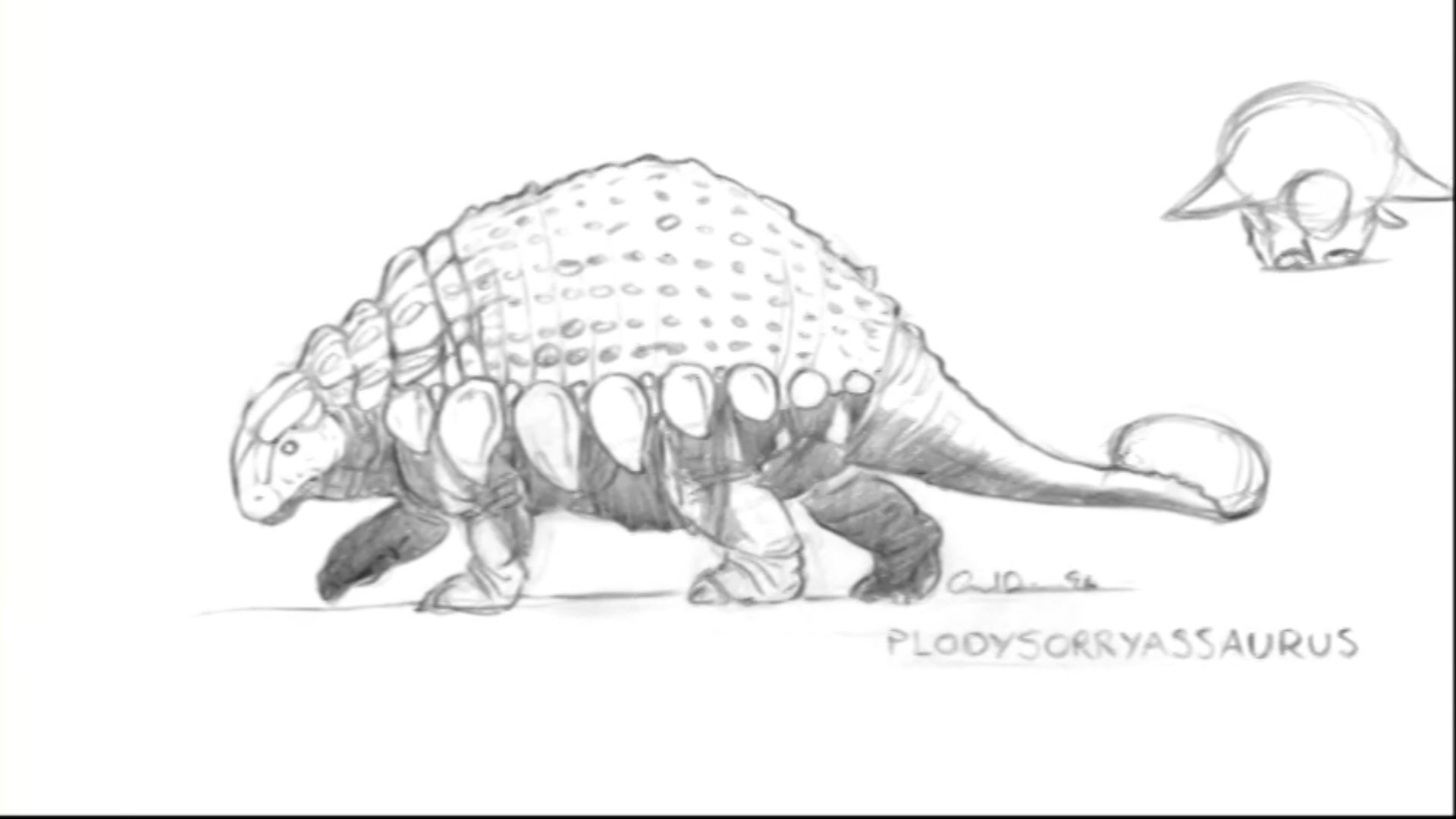
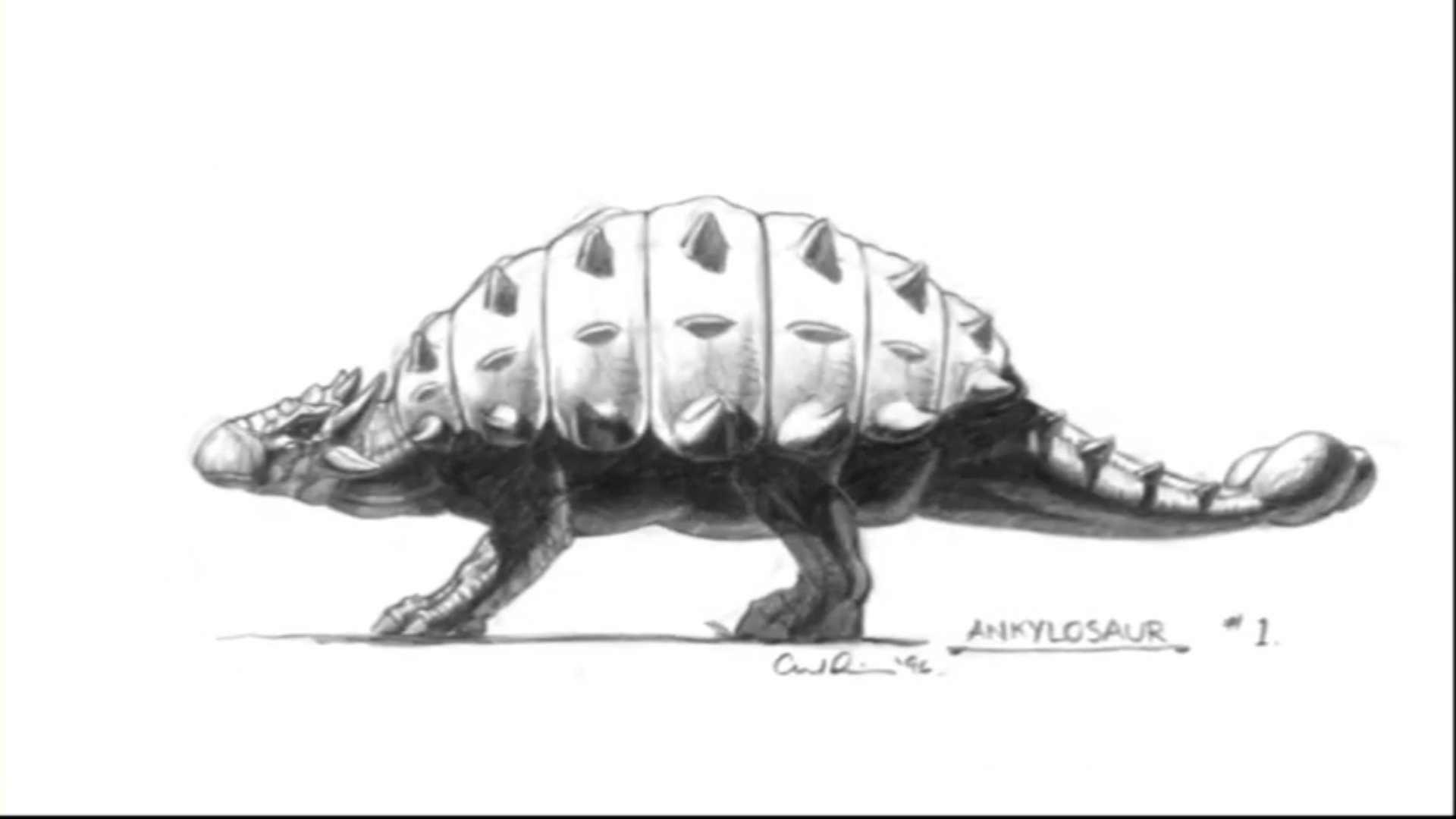
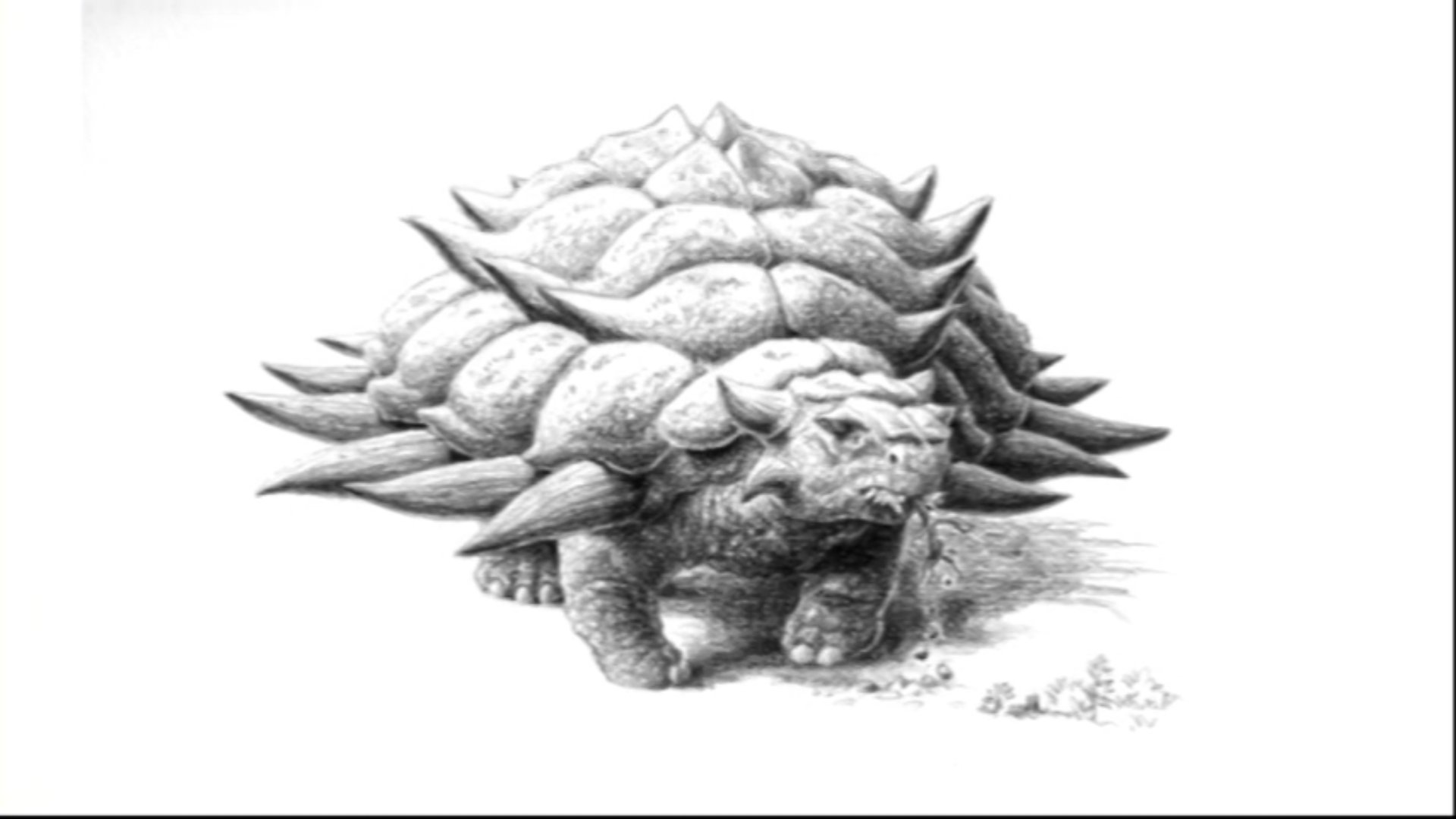
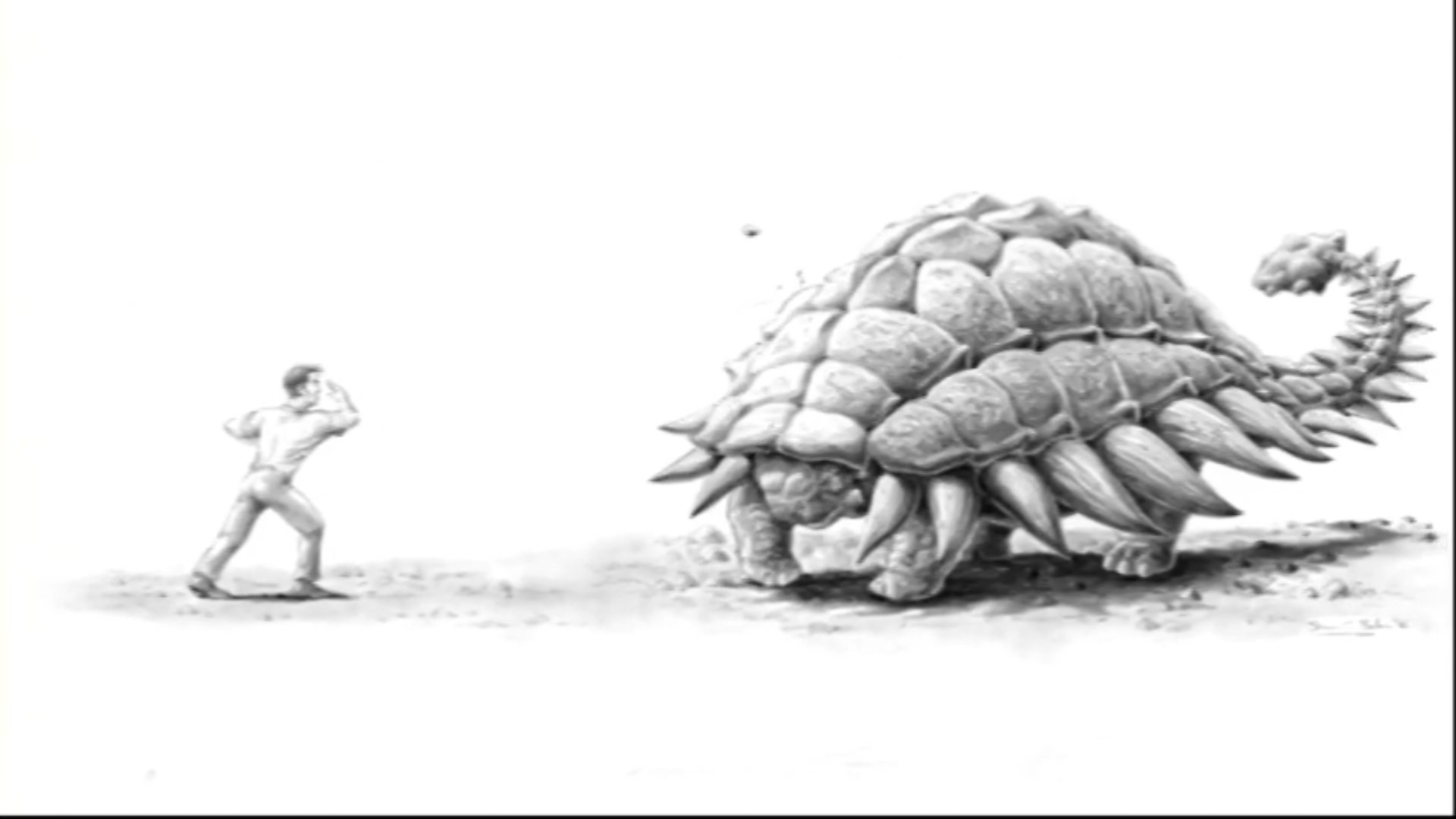
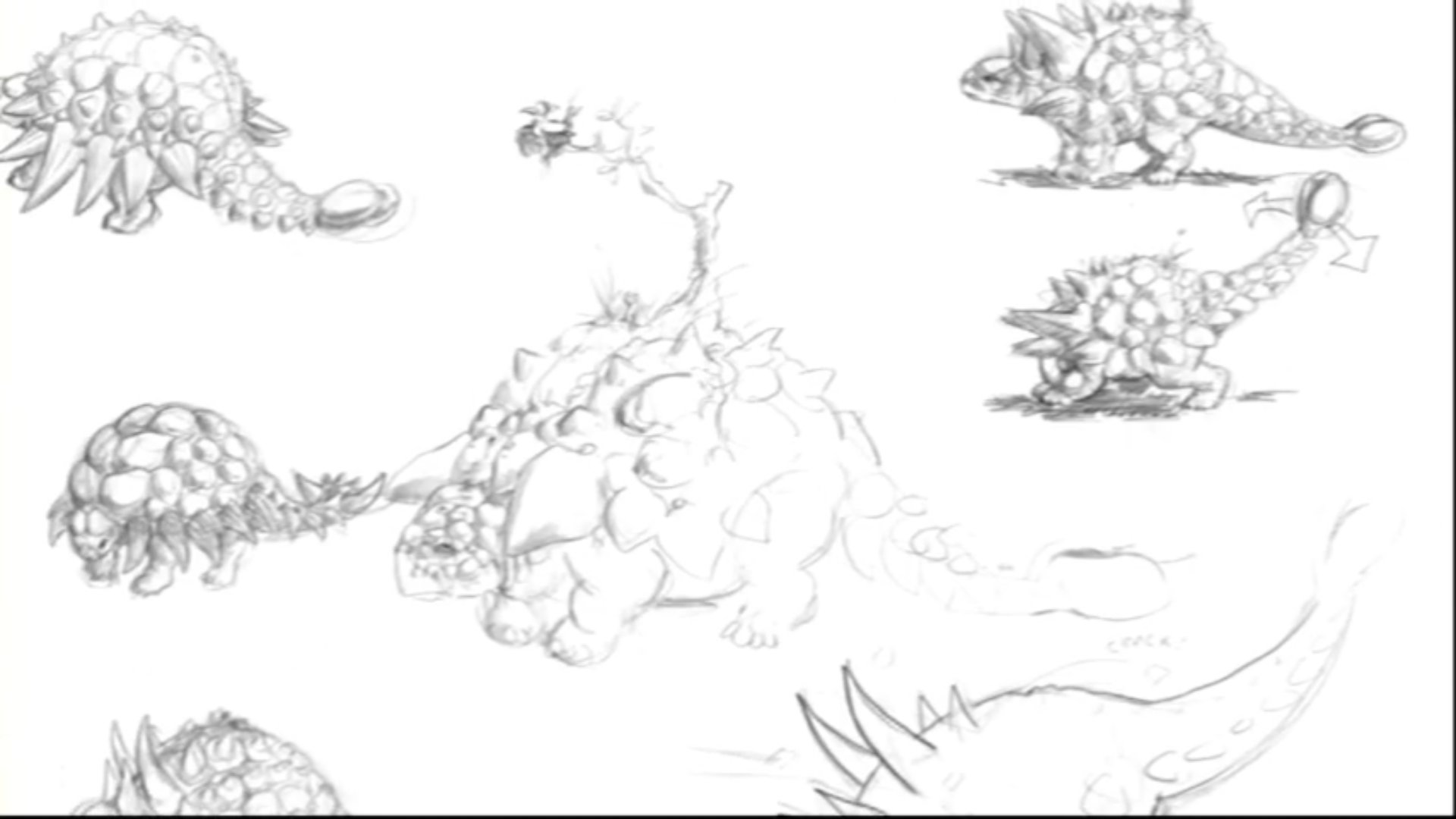
Concept art
King Kong (1996)
Roar
A 2023 study based on the preserved larynx of a fellow ankylosaur Pinacosaurus found that in real life, Ankylosaurus and other ankylosaurs would likely have had calls similar in nature to those of birds.[9]
In Godzilla, King of the Monsters, the onomatopoeia used for the Ankylosaurus' roar is "Gyaaasu" (ギャアアス).
Trivia
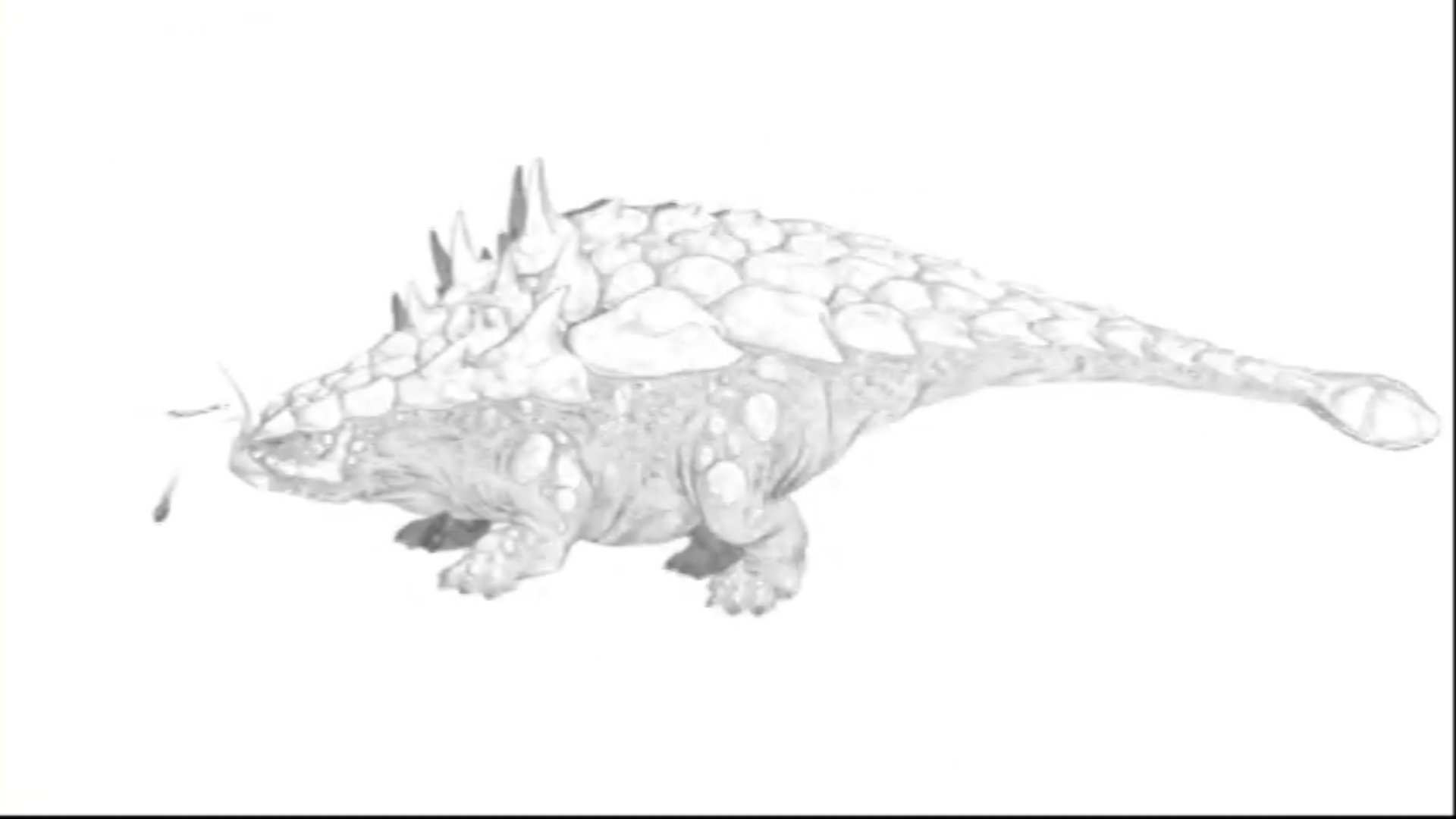
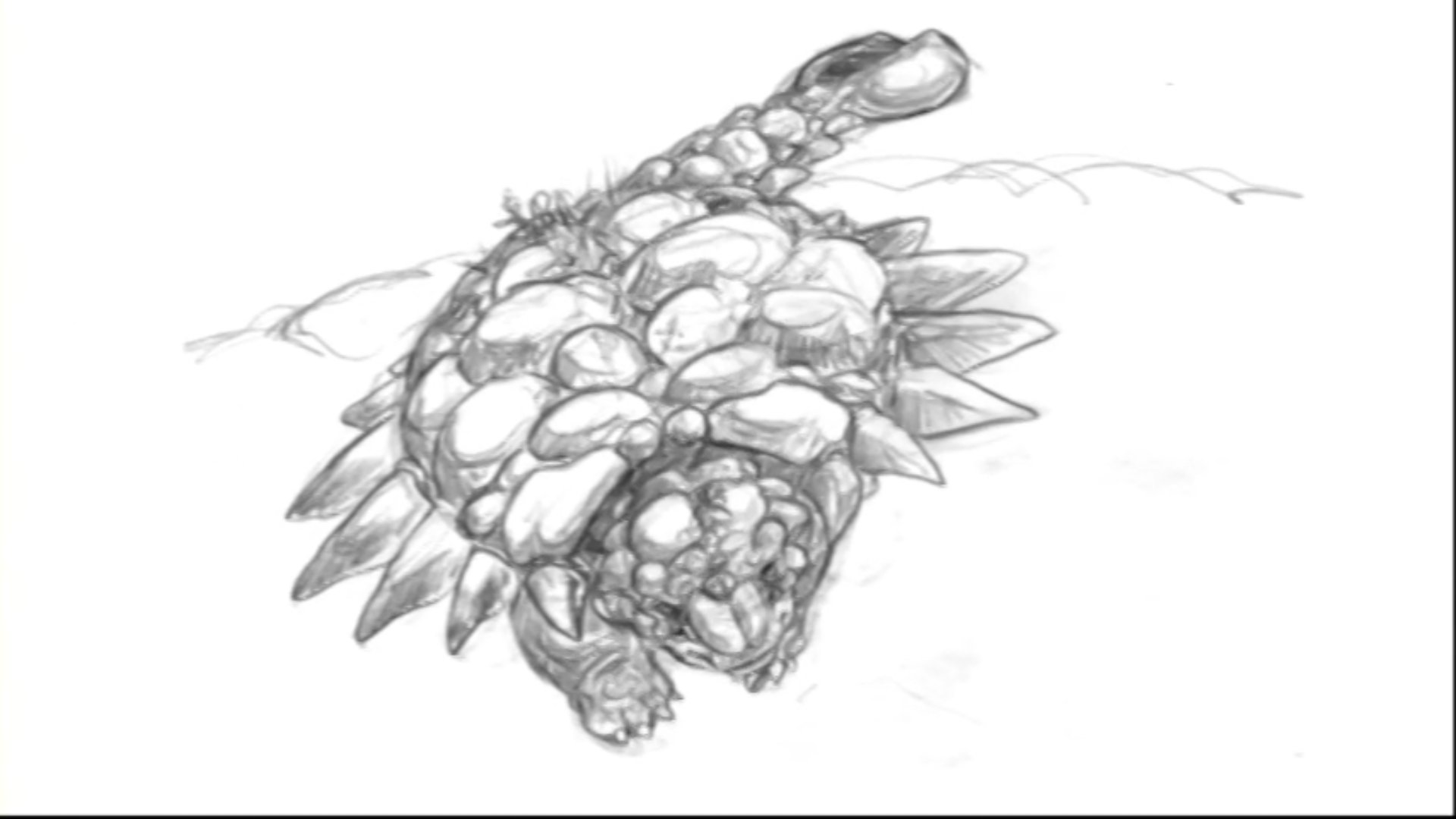
- Ankylosaurus was also planned to appear in two eventually-scrapped films: Creation[citation needed] and the 1996 King Kong film. In the latter, it would've been an inhabitant of Skull Island, but no other details are known; while some elements of this version were incorporated into the 2005 King Kong film, Ankylosaurus was not one of them.
- The unmade 1957-1958 film The Volcano Monsters, which was to be derived from Godzilla Raids Again, would have simply referred to Anguirus as a giant Ankylosaurus.
- In Godzilla, King of the Monsters, the mounted skeleton of the Ankylosaurus matches Barnum Brown's reconstruction without the osteoderms.[5]
Related characters
|
|
External links
References
This is a list of references for Ankylosaurus. These citations are used to identify the reliable sources on which this article is based. These references appear inside articles in the form of superscript numbers, which look like this: [1]
|
Comments
Showing 3 comments. When commenting, please remain respectful of other users, stay on topic, and avoid role-playing and excessive punctuation. Comments which violate these guidelines may be removed by administrators.

|

|